
What Are DIN929 Projection Weld Nut Grade 8 Carbon Steel Zinc Plated Used for in Sheet Metal Fabrication?
Sheet metal manufacturing always looks for dependable fastening solutions for thin metal panels. Traditional tapping on thin sheets often damages threads, while rivets cannot stand long-term vibration loads. Many fabricators turn to projection welding to solve this problem. DIN929 Projection Weld Nut Grade 8 Carbon Steel Zinc Plated is a widely adopted standard fastener engineered for resistance projection welding. It comes with three integrated projections on the rear face, which concentrate welding current to create a solid permanent bond between nut and sheet metal.
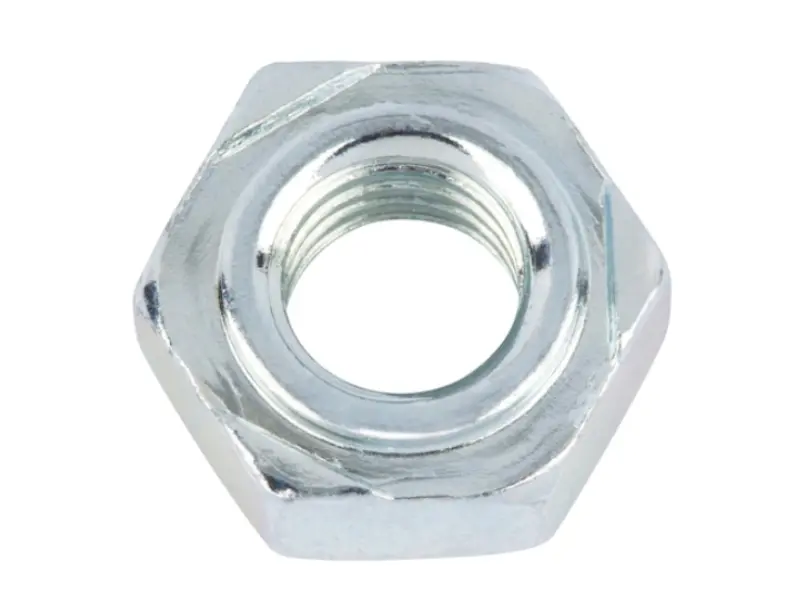
What Sheet Metal Applications Rely on Projection Weld Nuts
The versatility of projection weld nuts makes them essential in multiple industrial sectors. These fasteners are integrated into sheet metal assemblies where strong threaded connection points must be built efficiently during mass production.
1. Automotive sheet metal assemblies: Mounting brackets, door reinforcements and interior support frames all require vibration-resistant threaded joints.
2. Electrical cabinets and control enclosures: Internal mounting plates and bracket fixtures need stable fastening without weakening the thin cabinet shell.
3. Home appliance metal housings: Frames for large household equipment use these weld nuts to secure internal components neatly.
4. New energy equipment, elevator parts and agricultural machinery: Mass automated welding lines prefer this type of hex weld nut for consistent results.
How Projection Welding Works for Sheet Metal Assembly
Projection welding operates differently from ordinary bolt fastening. When electric current passes through the contact points, the raised projections on the nut heat up rapidly and melt. Once cooled, the nut fuses tightly to the metal sheet and becomes a permanent part of the component.
For medium-load indoor and mild outdoor projects, fabricators frequently select DIN929 Projection Weld Nut Grade 8 Carbon Steel Zinc Plated. This design eliminates pre-tapping operations on sheet metal, cutting down machining time and lowering overall production expenditure. The hexagonal outer profile also prevents nut rotation after welding, which is a common failure point for many cheaper weld fasteners.
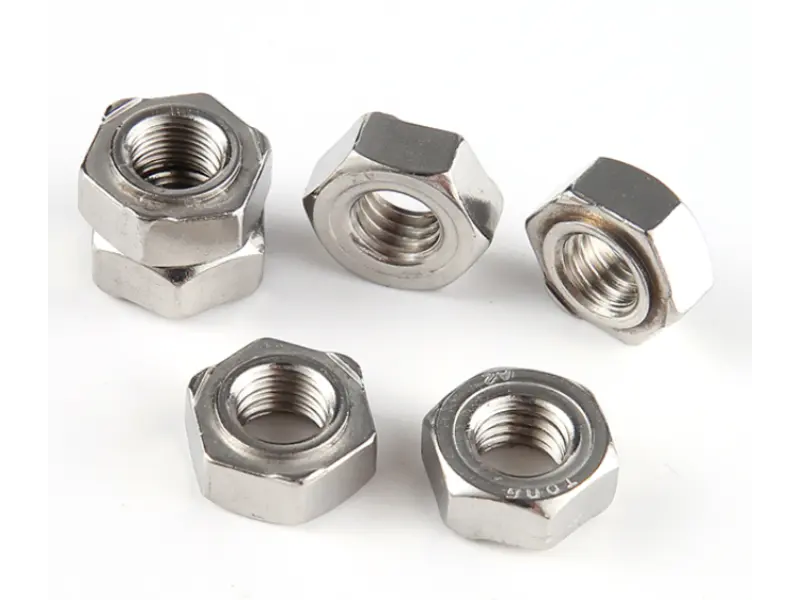
Key Advantages for Sheet Metal Fabricators
Manufacturers running high-volume sheet metal production can gain many practical benefits by integrating projection weld nuts into their workflow.
- Fully compatible with automated spot welding machines, raising throughput for large batch orders.
- Grade 8 carbon steel substrate delivers stable mechanical strength for medium load fastening requirements.
- Zinc plated surface treatment offers reliable corrosion resistance under normal indoor and mildly humid outdoor environments.
- Standard DIN dimensions allow seamless interchangeability and direct replacement for existing production components.
- Compact footprint saves internal space inside finished products and supports lightweight product design trends.
Material and Surface Finish Selection Guidance
There is no universal weld nut suitable for every working condition. Material selection should match the base metal and surrounding environment.
If your sheet metal substrate is stainless steel, A2 stainless steel DIN929 weld nuts are strongly recommended to avoid galvanic corrosion when exposed to moisture. For dry indoor projects with low anti-rust requirements, black oxide carbon steel options can help control procurement costs. DIN929 Projection Weld Nut Grade 8 Carbon Steel Zinc Plated remains the most versatile choice for general sheet metal fabrication projects.
Manufacturing & Quality Assurance
Poor-quality weld nuts often lead to welding spatter, weak bonding and costly assembly rework. Choosing a supplier with complete quality control systems is critical for stable production.
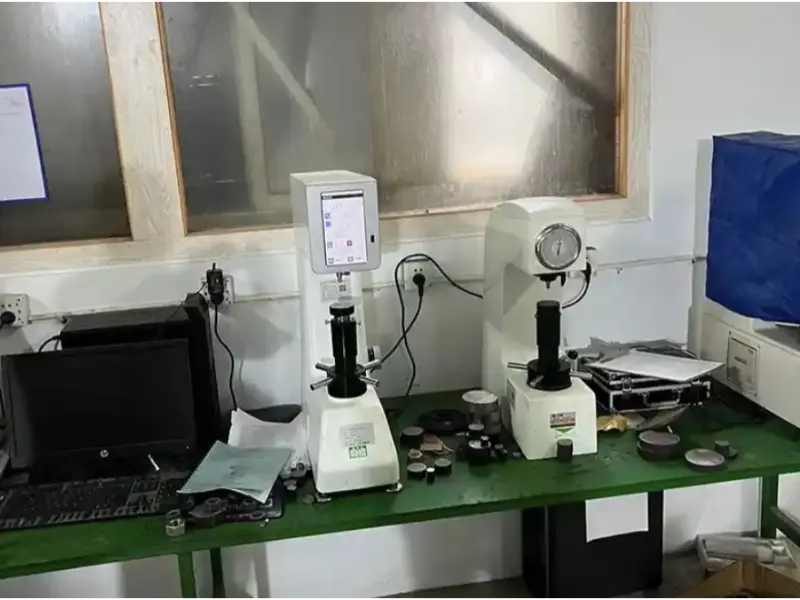
Ningbo Gangtong Zheli Fasteners performs full inspections for every batch of weld nuts. We check thread dimension tolerance, projection height consistency and mechanical hardness. Our in-house hardness testing laboratory verifies mechanical performance, ensuring all finished products comply with DIN standards before shipment. Every customer can request MTC material test certificates for batch traceability.
Packaging & Delivery
Reliable packaging and delivery control help reduce assembly losses and keep customer production schedules stable. For DIN929 Projection Weld Nut Grade 8 Carbon Steel Zinc Plated, we adopt standardized packaging solutions according to order quantity, transportation method and customer requirements.
Products are usually packed in strong cartons, with anti-corrosion protection to avoid rust during sea freight. For larger orders, pallet packing is available to improve loading and unloading efficiency and reduce the risk of mixed batches. Each package can be labeled with part number, specification, quantity, batch code and manufacturer information for easy traceability.
Our export packing process ensures that weld nuts arrive at the customer’s warehouse in good condition, with less risk of collision, contamination or quantity deviation.
FAQ
1: What is the minimum sheet thickness recommended for projection welding?
A: The suggested minimum sheet thickness is 0.8mm. Plates thinner than this may burn through during welding and lose structural integrity. When working with thin sheets, weld operators need to carefully adjust welding current and pressing force.
Q2: Is it possible to weld DIN929 nuts onto galvanized steel sheets?
A: Yes, but welding parameters need fine tuning. Galvanized coating will produce spatter at high current, which may affect the appearance and bonding quality of the welding area.
Q3: Do I need special welding equipment to install projection weld nuts?
A: Standard resistance spot welding machines are sufficient for installation. No special customized tools are required for regular production. Operators only need simple training to get stable welding results.
Send Inquiry


X
We use cookies to offer you a better browsing experience, analyze site traffic and personalize content. By using this site, you agree to our use of cookies.
Privacy Policy