
How Do Solar Accessories Improve the Reliability of a Solar Mounting System?
When buyers evaluate a solar project, they often pay close attention to panels and inverters while giving far less attention to the smaller parts that keep the whole structure stable. In practice, many installation issues do not begin with the modules themselves. They begin with mismatched brackets, weak fasteners, poor corrosion resistance, or accessories that were selected without considering roof type, wind exposure, drainage, and long-term maintenance. This is why solar accessories deserve much more attention. For installers, EPC contractors, distributors, and project owners, the right accessory package can reduce delays, lower maintenance pressure, improve installation efficiency, and support the long service life expected from a solar system. As a manufacturer active in this field, Ningbo Gangtong Zheli Fasteners Co.,Ltd. understands that buyers are not simply purchasing parts. They are trying to avoid risk, keep construction on schedule, and make sure every connection in the system remains dependable over time.
Article Summary
This article explains why solar accessories matter far more than many buyers first assume. It explores common pain points in solar mounting projects, shows how different accessories affect structural security and installation speed, compares typical component choices, and outlines what buyers should look for before ordering. It also includes a practical checklist, a comparison table, and a FAQ section to help purchasing teams make more confident decisions.
Table of Contents
- Article Outline
- What Problems Do Buyers Usually Face When Choosing Solar Accessories?
- Why Do Small Components Have Such a Big Impact on Solar System Performance?
- Which Solar Accessories Are Most Common in Mounting Projects?
- How Can the Right Accessories Reduce Installation Delays and Maintenance Risk?
- What Should Buyers Check Before Placing an Order?
- How Should Different Project Types Influence Accessory Selection?
- What Makes a Supplier More Reliable for Long-Term Cooperation?
- FAQ
- Conclusion
Article Outline
- The hidden pain points behind accessory selection
- The role of accessories in system stability and service life
- The main categories of solar mounting accessories
- How accessory quality affects project progress and maintenance
- Key buying criteria before procurement
- Selection logic for roof, ground, and commercial projects
- How to evaluate a dependable supplier
What Problems Do Buyers Usually Face When Choosing Solar Accessories?
Many buyers arrive at the procurement stage with a clear target for panel quantity, output expectations, and project budget, yet still run into avoidable trouble because the accessory selection process was treated as a minor detail. That is where things start to go wrong. A solar structure depends on many connecting points, and each one must work under outdoor conditions for years. If just one part is poorly chosen, the result may be movement, loosening, misalignment, leakage risk, or premature corrosion.
One common problem is buying solar accessories only by price. Lower unit cost may look attractive on a quotation sheet, but that number does not show the full project cost. If installers need extra labor to adapt incompatible parts, if shipments are delayed because of missing hardware, or if a completed system later needs rework, the initial savings disappear quickly. Buyers also face confusion when comparing products that appear similar but are made with different materials, coatings, tolerances, or structural designs.
Another frequent pain point is uncertainty about matching the accessory set to the actual project environment. A coastal project, for example, cannot be evaluated the same way as an inland rooftop installation. A tile roof requires a different approach from a metal roof. Ground-mounted systems demand their own foundation logic. In other words, the correct choice is rarely universal. It depends on load conditions, installation surface, climate, layout, and maintenance expectations.
- Inconsistent dimensions that slow assembly
- Fasteners or brackets that are not suited to the installation surface
- Insufficient corrosion resistance for humid or coastal environments
- Unclear packaging and labeling that create on-site confusion
- Accessory shortages that interrupt installation schedules
- Lack of technical communication before production or delivery
Why Do Small Components Have Such a Big Impact on Solar System Performance?
The answer is simple: the solar mounting system only performs as well as its weakest connection point. Modules may receive most of the attention, but brackets, clamps, bolts, channels, and related hardware determine whether those modules remain secure, aligned, and serviceable under real operating conditions. This is why experienced buyers take solar accessories seriously from the beginning instead of treating them as an afterthought.
Accessories directly influence structural integrity. They help transfer load, maintain panel position, resist vibration, and handle long-term exposure to wind, rain, temperature changes, and mechanical stress. Even slight design differences can affect installation accuracy and service stability. A poorly fitted accessory might not fail on day one, but it can create a chain reaction over time: movement leads to stress, stress leads to loosening, and loosening leads to maintenance work or potential system damage.
They also influence labor efficiency. Installers prefer parts that fit as expected, arrive clearly organized, and can be assembled without repeated adjustment. For procurement teams, this matters because field efficiency becomes part of project profitability. The right accessory selection supports faster installation, fewer on-site surprises, and better coordination between design and execution.
| Accessory Function | Project Impact | If Chosen Poorly |
|---|---|---|
| Structural connection | Keeps mounting system stable and secure | Loosening, shifting, or reduced load confidence |
| Installation efficiency | Supports faster and cleaner assembly | Extra labor, misalignment, site delays |
| Environmental resistance | Improves durability in outdoor conditions | Rust, wear, premature replacement |
| Maintenance accessibility | Makes servicing easier over time | Difficult repairs and higher service cost |
Which Solar Accessories Are Most Common in Mounting Projects?
Buyers often ask which parts truly belong in the category of solar accessories. The answer depends on the structure being built, but several components appear repeatedly across residential, commercial, and industrial projects. These products are not decorative add-ons. They support installation, connection, fixation, and long-term system reliability.
In roof-mounted systems, roof hooks, clamps, bolts, and rails or channels are common. In ground projects, foundation-related parts such as ground screws or structural channels may become more important. Aluminum profiles are often valued for their balance of strength and weight, while steel components may be preferred when specific load conditions or structural requirements demand it.
- Roof hooks for tile roof mounting support
- Solar brackets for panel support and structural connection
- Hanger bolts for fastening in suitable roof applications
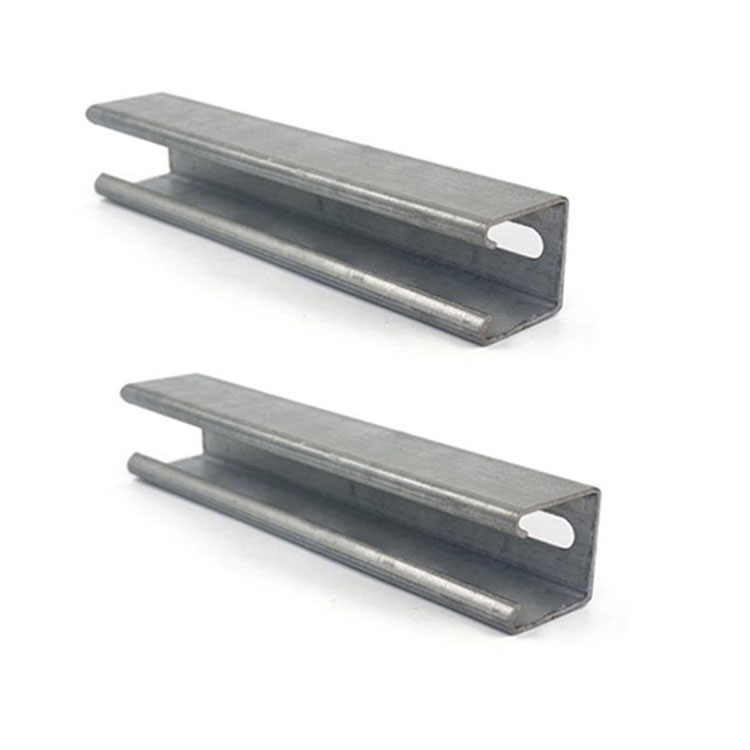
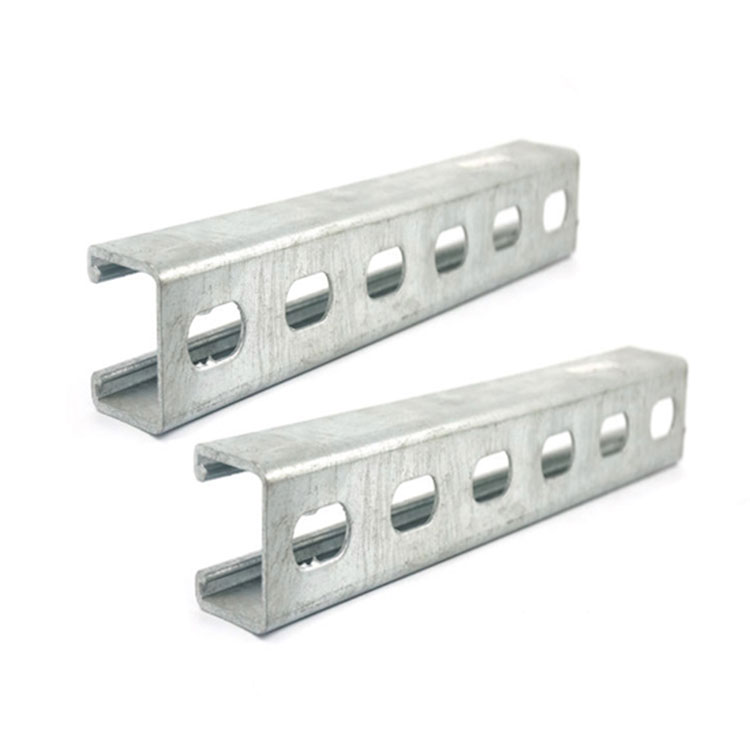
- Steel channels for load-bearing support structures
- Aluminum clamps for securing modules efficiently
- Aluminum profiles for lightweight and corrosion-aware design needs
- Ground screws for suitable ground-mounted foundation solutions
The real challenge is not just knowing the names of the parts. It is understanding how they work together. A single component may look acceptable in isolation, but if its dimensions, compatibility, or finishing do not align with the rest of the system, the installation team will feel the problem immediately.
How Can the Right Accessories Reduce Installation Delays and Maintenance Risk?
For many procurement teams, the biggest pressure is not just buying components. It is keeping the project moving. Delays cost money, frustrate stakeholders, and create unnecessary tension between purchasing, warehousing, and installation teams. This is where reliable solar accessories become a practical advantage rather than a technical detail.
When accessories are well designed and consistently manufactured, installers spend less time correcting fitment issues. Holes line up. Hardware matches the specified dimensions. Clamps grip properly. Packaging allows workers to identify parts quickly. Each of these small improvements saves minutes, and those minutes accumulate into meaningful schedule protection across a full project.
The maintenance side matters just as much. A system that uses dependable materials and sensible accessory design is less likely to require repeated visits for tightening, replacement, or corrosion-related correction. Over the full life cycle of a project, that can make a substantial difference in operating cost and customer satisfaction.
- Accurate components reduce on-site modification work.
- Suitable materials help prevent early wear and corrosion.
- Stable fastening lowers the risk of movement over time.
- Clear product consistency supports smooth batch installation.
- Dependable supply reduces the chance of missing-part delays.
What Should Buyers Check Before Placing an Order?
Before placing an order for solar accessories, buyers should avoid focusing only on appearance or quoted price. A stronger purchasing process asks whether the parts fit the application, the environment, and the project workflow. That means checking not only the product but also the supplier’s ability to communicate clearly and deliver consistently.
A good pre-order review often saves more trouble than any post-delivery fix. It is far easier to confirm dimensions, materials, and packaging requirements before production than to solve misunderstandings after goods arrive on site.
| What to Check | Why It Matters | Typical Buyer Concern |
|---|---|---|
| Material type | Affects strength, durability, and suitability | Will it hold up in the actual environment? |
| Dimensions and tolerances | Ensures fit with system design | Will the parts match the project drawings? |
| Surface treatment | Improves long-term outdoor performance | How will it perform in rain, salt air, or heat? |
| Packaging and labeling | Supports warehouse handling and site efficiency | Can workers sort and identify parts quickly? |
| Supply stability | Protects construction schedules | Can repeat orders stay consistent? |
Buyers should also ask practical questions early:
- What roof or ground condition is this system designed for?
- What material options are available for this accessory set?
- Can the supplier support custom dimensions if needed?
- How are parts packed for export, storage, and site handling?
- How does the supplier control consistency across batches?
How Should Different Project Types Influence Accessory Selection?
Not every project needs the same accessory package, and this is where buyers can make much smarter decisions. The most suitable solar accessories depend on site conditions, structural method, and installation priorities. A solution that works smoothly for a small rooftop array may not be appropriate for a commercial building or a large ground-mounted system.
For residential rooftops, buyers usually care about roof compatibility, ease of installation, visual neatness, and dependable waterproof integration. For commercial projects, consistency across larger quantities becomes critical. For ground-mounted systems, structural support, soil conditions, and installation efficiency often become central concerns.
- Residential roof projects: prioritize compatibility, compact design, and straightforward installation
- Commercial roofs: prioritize repeatability, fast assembly, and clear logistics
- Ground-mounted systems: prioritize structural support, foundation logic, and site-specific durability
- Harsh environments: prioritize corrosion resistance and material suitability
- Custom projects: prioritize technical communication and flexible production support
This is exactly why one-size-fits-all thinking usually creates problems. The best outcome comes from matching component selection to actual project conditions rather than assuming the same package can solve every installation challenge.
What Makes a Supplier More Reliable for Long-Term Cooperation?
Buyers rarely want a supplier for one order only. Most are looking for consistency, responsiveness, and fewer problems in future purchasing cycles. That is why supplier evaluation should go beyond product photos and basic pricing. When sourcing solar accessories, a reliable partner should make the procurement process easier, not more complicated.
Strong cooperation usually depends on several practical qualities. First, the supplier should understand the application well enough to communicate clearly about compatibility and use conditions. Second, production consistency matters because repeat orders must remain stable. Third, packaging, documentation, and lead time coordination need to support real project execution instead of creating confusion after shipment.
Ningbo Gangtong Zheli Fasteners Co.,Ltd. operates in a product field where buyers often need dependable support across multiple accessory categories rather than isolated items. That matters because many projects benefit from supplier coordination on matching parts, batch consistency, and long-term purchasing convenience.
- Clear communication before production begins
- Consistent product quality across repeat orders
- Ability to support both standard and project-specific needs
- Practical understanding of export packing and logistics
- Dependable delivery coordination for project schedules
FAQ
1. What are solar accessories in a mounting system?
They are the supporting components used to fix, connect, and stabilize solar mounting structures, such as brackets, hooks, bolts, channels, clamps, profiles, and related hardware.
2. Why are solar accessories so important if the panels are already high quality?
High-quality panels still rely on a stable structure. If the accessories are poorly chosen, the entire installation can suffer from misalignment, loosening, corrosion, or added maintenance pressure.
3. Which material is better for solar accessories, aluminum or steel?
It depends on the project. Aluminum is often valued for lower weight and good corrosion behavior, while steel may be preferred where specific structural demands or project designs require it.
4. How can buyers reduce procurement risk when ordering solar accessories?
Buyers should confirm dimensions, application compatibility, material options, surface treatment, packaging, and delivery coordination before placing the order.
5. Do all solar projects use the same accessory combination?
No. Roof type, climate, structural method, and installation conditions all influence which accessory combination is most suitable.
6. Can the right accessories actually save labor cost?
Yes. Better-fit components usually reduce adjustment time, simplify installation, and lower the chance of rework, which helps save labor and protect the project schedule.
Conclusion
Choosing solar accessories is not a minor step in a solar project. It is one of the decisions that quietly shapes installation efficiency, long-term stability, and maintenance confidence. Buyers who look beyond surface-level pricing and focus on compatibility, consistency, and application fit are far more likely to avoid preventable problems. Whether the project is residential, commercial, or industrial, the right accessory selection helps create a stronger and more dependable mounting system from the start.
If you are comparing options for your next project and want practical support in choosing suitable solar accessories, contact us to discuss your requirements, simplify your sourcing process, and find a more reliable solution for long-term solar installation performance.
Send Inquiry


X
We use cookies to offer you a better browsing experience, analyze site traffic and personalize content. By using this site, you agree to our use of cookies.
Privacy Policy