
What Makes ASME B18.2.2 Hex Jam Nut Inch Series Ideal for Limited Space Fastening
Industrial designers and procurement engineers are under constant pressure to make assemblies smaller, lighter, and more efficient. But while components shrink, fastening requirements do not disappear: threads must still engage properly, clamping force must remain stable, and vibration must not loosen the connection over time.
This is where inch-series thin nuts become more than just a space-saving alternative. The ASME B18.2.2 Hex Jam Nut Inch Series is designed to address one of the most common engineering conflicts in compact mechanical design: how to maintain reliable fastening when axial height is restricted.
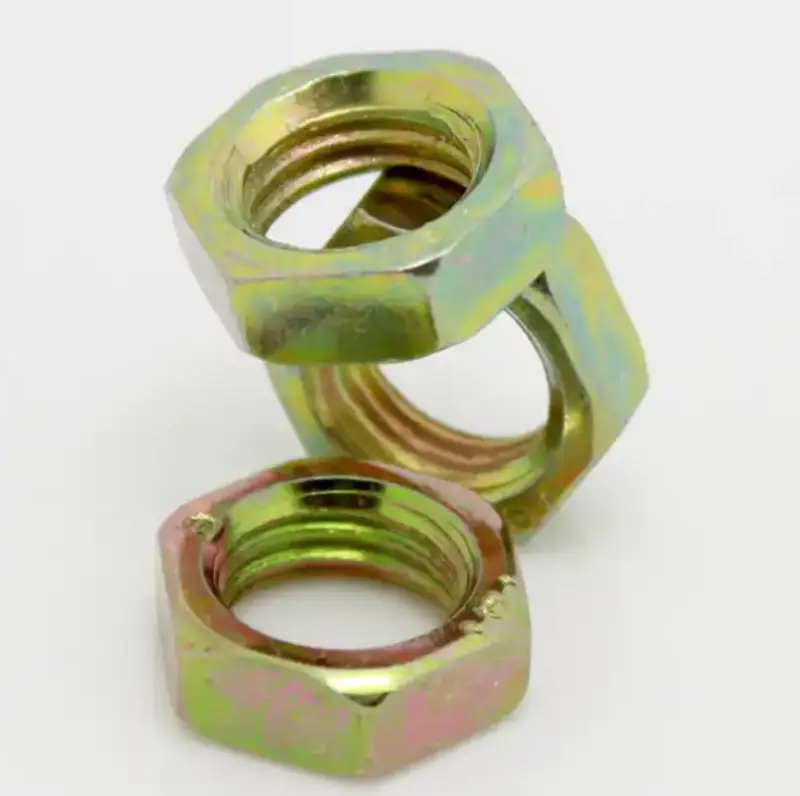
Common Space Constraints in Modern Assembly
In many industrial designs, standard-height hex nuts are simply too tall. In tight installations, a full-height nut may interfere with adjacent components, exceed housing boundaries, or leave insufficient thread engagement on shortened studs.
This issue frequently appears across these scenarios:
- Compact machinery and miniature equipment
- Automotive and chassis-related assemblies
- Valve and pipeline connections
- Instrumentation and control devices
- Adjustment mechanisms and bearing preload positions
When standard nuts cannot be used, engineers often consider thinner fasteners. However, reducing nut height brings new risks, including weaker thread engagement, lower clamping force, and reduced resistance to self-loosening. The core challenge is not only fitting the nut, but keeping the connection stable under real working loads.
Why Standardization Matters for Inch Fasteners
The ASME B18.2.2 Hex Jam Nut Inch Series follows a recognized specification for general-purpose inch nuts. For sourcing teams, this standard brings clear practical benefits.
First, it guarantees interchangeability. Jam nuts manufactured per ASME B18.2.2 match the defined inch geometry, fitting existing bolt assemblies without custom machining. This greatly simplifies OEM production, equipment maintenance and spare part stocking.
Second, it creates a unified evaluation benchmark. Instead of comparing non-standard custom thin nuts from different factories, engineers can judge products against fixed dimensions for flats, corners and nut thickness. It streamlines design verification and supplier qualification.
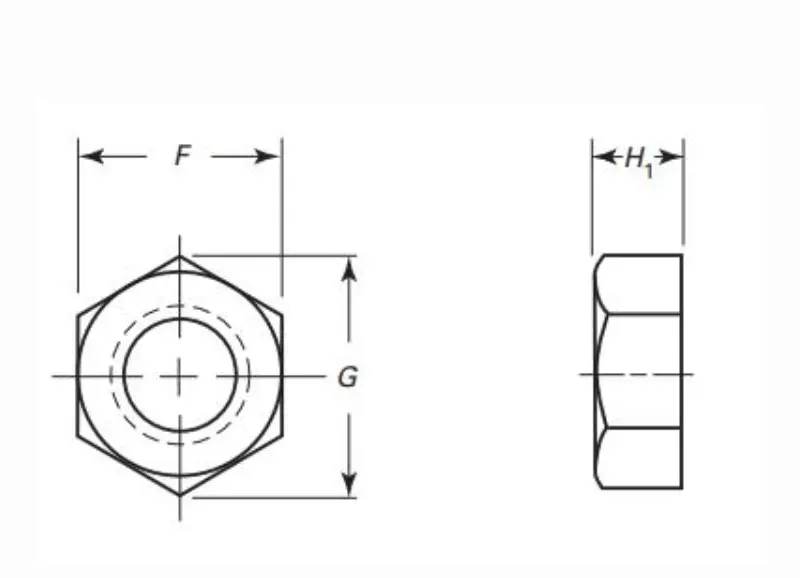
Jam Nuts Are Not Just Shorter Ordinary Nuts
A widespread misconception is that a jam nut is only a cut-down version of a regular hex nut. In fact, reduced thickness changes the whole load distribution of the fastener.
With less material to spread stress, thread pressure rises faster. This makes thread precision, material uniformity and hardness control far more critical. When sourcing the ASME B18.2.2 Hex Jam Nut Inch Series, buyers should never judge the product by thickness alone. Thread tolerance, raw material grade, surface treatment and batch consistency all decide long-term performance.
How Double-Nut Anti-Loosening Works
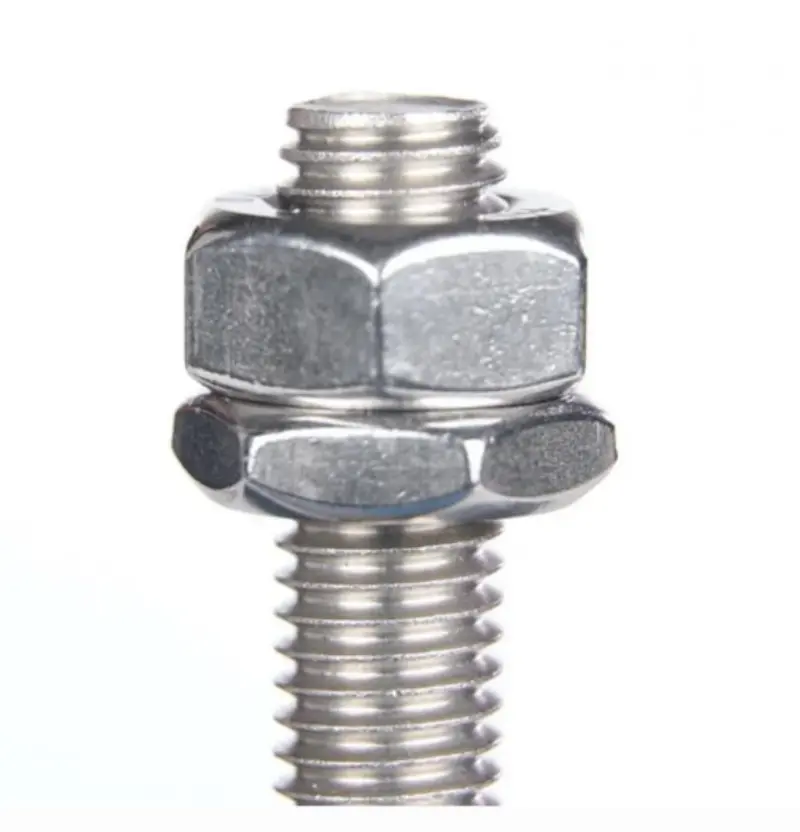
The most classic and mature use for this thin nut is double-nut locking.
The jam nut is tightened first against the component surface, followed by the standard main nut fastened firmly against it. When installed correctly, friction on the contact surface and between thread flanks counteracts loosening caused by vibration, temperature cycles and dynamic loads.
The thin nut carries a unique role here. Its low height occupies minimal axial space while acting as the secondary locking element. It enables anti-vibration fastening in positions where a second full-size nut cannot fit. For purchasing teams, it is important to understand: the ASME B18.2.2 Hex Jam Nut Inch Series is not merely a space filler, but an indispensable part of this proven locking structure.
Material & Coating Selection Guide
Space saving is the core demand, yet material and surface finish directly determine the whole service life. You can quickly select the suitable option according to your working environment and budget with the reference table below.
|
Inspection Item |
Acceptance Requirement |
Purpose of Check |
|
Overall Dimension |
Conforms to ASME B18.2.2 |
Guarantee interchangeability with inch bolts |
|
Thread |
Pass go / no-go thread gauge |
Prevent jamming or insufficient engagement |
|
Hardness |
Stable within specified range |
Avoid thread stripping or deformation |
|
Surface Coating |
Uniform thickness, no peeling |
Control corrosion resistance |
|
Visual Appearance |
No crack, burr or scratch |
Reduce hidden failure risks |
Key Design Tips for Thin Nut Installation
Due to limited load-bearing material, jam nuts demand more careful design and assembly control.
Ensure Enough Thread Engagement
The bolt or stud must reserve adequate usable thread length for both the jam nut and main nut. Too little engagement may lead to insufficient clamping force or thread stripping.
Keep Contact Surfaces Clean and Flat
Burrs, paint residue and uneven machining weaken friction and affect torque transfer. This point is especially vital for double-nut locking assemblies.
Do Not Copy Torque Values from Standard Nuts
Never apply the same torque setting as a regular hex nut of the same size. Material, lubrication and coating all change the relationship between torque and actual clamp load.
What Buyers Should Check When Auditing Suppliers
Visually, most thin nuts look similar. The real quality gap hides in measurable technical indicators. Focus on these items during supplier evaluation:
- Dimensional compliance with ASME B18.2.2
- Thread inspection by go / no-go gauges
- Material traceability and test certificates
- Stable hardness across batches
- Coating thickness and surface quality
- Consistent quality from batch to batch
Reliable suppliers can provide material test reports and dimension inspection records, lowering the risk of assembly line shutdowns and on-site failures.
Market Trend: Compact Fastening Demand Keeps Rising
Global mechanical design is moving toward miniaturization and integrated modular structures. Every millimeter of axial space counts for automation modules, compact actuators and miniature sensors. Standard thick nuts often cannot fit into these tight design envelopes.
Meanwhile, industrial buyers are shifting from price-only purchasing to comprehensive quality assessment. More engineers prefer suppliers who fully understand the matching relationship among raw material, thread tolerance, coating and assembly performance.
Final Takeaway
The ASME B18.2.2 Hex Jam Nut Inch Series stands out for confined fastening applications not just because it is shorter. It delivers standardized, interchangeable inch-series fastening for compact bolted joints.
With proper material selection and reasonable assembly design, it saves axial space and realizes double-nut anti-loosening where ordinary nuts cannot be installed. For engineering purchasers, the evaluation should cover dimension stability, material performance and environment adaptability, instead of only focusing on size.
In short, this inch hex jam nut lets designers save precious installation space without sacrificing the dependability of mature fastening solutions.
Send Inquiry


X
We use cookies to offer you a better browsing experience, analyze site traffic and personalize content. By using this site, you agree to our use of cookies.
Privacy Policy