
What are the application scenarios for DIN936 Thin Hex Nut Carbon Steel Stainless Steel?
In industrial equipment assembly and engineering construction, engineers often face a common challenge: the reserved mounting gap is too narrow to accommodate conventional full-height hex nuts. When standard nuts cannot be installed or will interfere with surrounding components, low-profile thin hex nuts become an indispensable fastening solution. Many hardware wholesalers, mechanical designers and project purchasers frequently inquire about suitable working conditions for this kind of fastener. DIN936 Thin Hex Nut Carbon Steel Stainless Steel is specially engineered for compact assembly environments. It retains reliable mechanical locking force while greatly reducing axial height, solving installation bottlenecks in many precision and heavy-duty projects. This article systematically sorts out its major application fields, analyzes material selection suggestions and on-site usage notes, helping global buyers quickly judge whether this thin hex nut matches their project specifications and procurement plans.
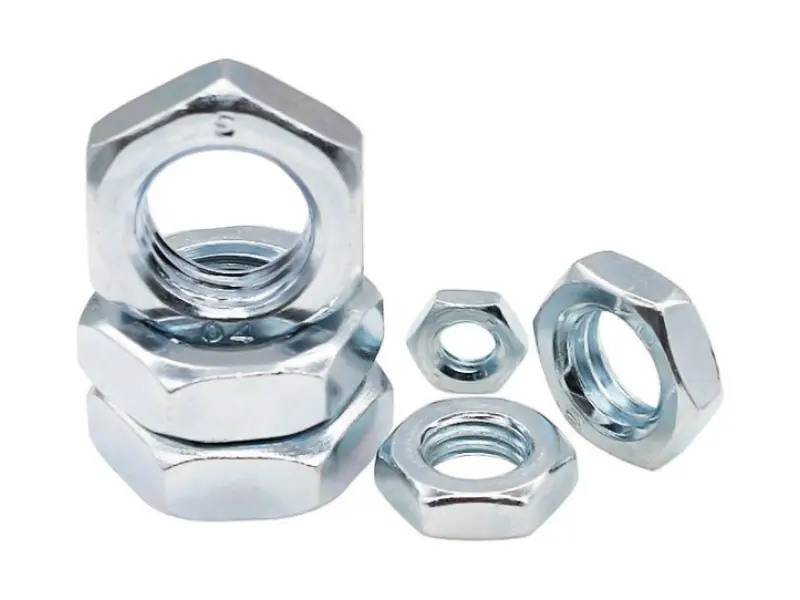
Precision Machinery Assembly
Modern precision machinery, automated production equipment and testing instruments adopt highly integrated internal design, with densely arranged transmission parts, sensor components and mounting brackets. The reserved assembly clearance is very limited, and ordinary full-height hex nuts will cause physical interference, unable to complete assembly or affect the movement of nearby moving parts. This series of thin nuts adopts controlled reduced thickness design and high-precision metric thread processing. DIN936 Thin Hex Nut Carbon Steel Stainless Steel can be smoothly embedded inside compact machine housings, transmission assemblies and precision instrument components. Carbon steel grades including 4.8 and 8.8 provide stable mechanical clamping strength for indoor dry workshop machinery. 304 and 316 stainless steel options resist rust and surface oxidation for equipment running in slightly humid or vapor-containing workshops. Strictly controlled thread tolerance ensures excellent matching accuracy with supporting bolts, reducing the risk of nut loosening under long-term continuous vibration of operating equipment and extending the overall service life of the whole machine.
|
Application Load Classification |
Recommended Usage Description |
|
Auxiliary locking load |
Double nut lock, limit positioning, anti-loosening secondary nut, the most common usage for DIN936 thin nuts |
|
Light static load |
Instrument shell, bracket fixing, cabinet accessories, short-term static stress |
|
Heavy dynamic load |
Not recommended, choose full height DIN934 hex nut for primary bearing connection |
Hydraulic Pipeline & Valve Fitting Projects
Hydraulic quick joints, fluid delivery pipelines, valve bodies and cylinder assemblies put forward strict restrictions on the overall height of fasteners. Overly thick nuts will occupy the space reserved for sealing gaskets, hinder pipeline layout, squeeze sealing components and easily cause sealing failure and medium leakage. Manufacturers of industrial hydraulic systems widely adopt thin hex nuts for auxiliary locking and double-nut anti-loosening. The low-profile structure reserves sufficient installation space for gaskets, pipe fittings and adjusting components. Carbon steel thin nuts with zinc plating are commonly used for ordinary industrial hydraulic stations and general fluid pipelines. Stainless steel variants apply to pipelines conveying weakly corrosive liquid media or installed in humid underground workshop environments. DIN936 Thin Hex Nut Carbon Steel Stainless Steel can maintain stable clamping force under periodic hydraulic pulsation and mechanical vibration, preventing the generation of connection gaps and liquid leakage during long-time continuous operation of hydraulic systems.
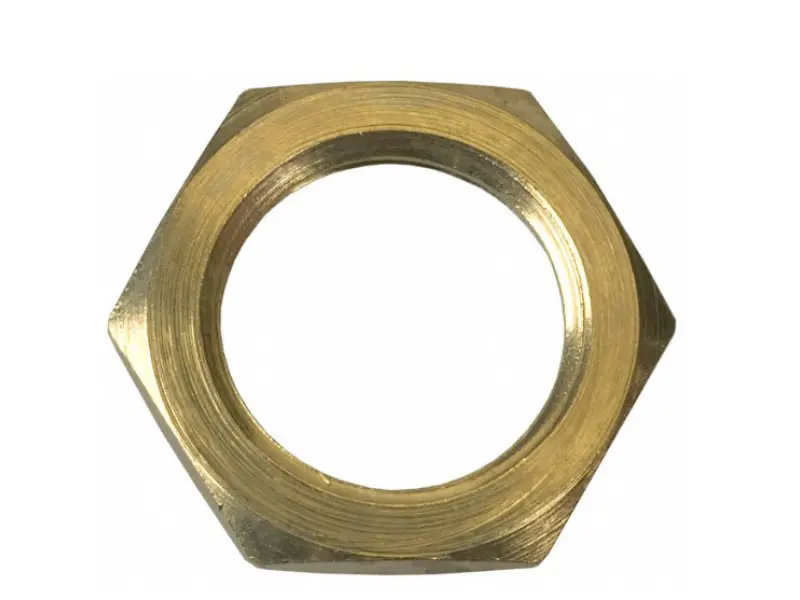
Automotive Auxiliary Component Fixing
Vehicle auxiliary structures, onboard electrical cabinets, sensor brackets and chassis accessory assemblies require lightweight fastening parts with small occupied space. Many assembly positions on passenger cars, engineering vehicles and agricultural machinery have compact structural layout, leaving insufficient space for standard full-height hex nuts. This thin hex nut serves as a mature auxiliary locking fastener for non-main load-bearing automobile parts. Its good anti-vibration performance can adapt to bumpy driving conditions and continuous road vibration, effectively preventing fastener rotation and loosening in the driving process. DIN936 Thin Hex Nut Carbon Steel Stainless Steel supports multiple surface finishes customized according to actual working environment, including blue white zinc, yellow zinc and passivation to resist surface oxidation and slight corrosion. It is widely used for fixing vehicle interior brackets, electrical module housings and auxiliary limit parts.
Electrical Cabinet & Electrical Equipment Manufacturing
Power distribution boxes, electrical control cabinets, outdoor power facilities and automation control equipment have dense internal wiring, terminal blocks and busbar components. Thick standard nuts may accidentally touch cables and live parts, bringing potential short-circuit and safety hazards. Thin hex nuts feature small axial size and will not interfere with internal circuit arrangement and maintenance operation. Zinc-plated carbon steel thin nuts are widely adopted for indoor electrical cabinet assembly, featuring high cost performance and stable fastening performance. Stainless steel products are preferred for outdoor electrical facilities exposed to rain, dew and moisture. DIN936 Thin Hex Nut Carbon Steel Stainless Steel meets the long-term stable fixing requirements of electrical equipment without occupying excess internal cabinet space, facilitating later inspection, wiring and equipment maintenance work.
Outdoor & Coastal Engineering Facilities
Outdoor steel structure supports, lifting equipment accessories, port machinery and coastal mechanical installations are exposed to complex natural environments for a long time. Ordinary untreated carbon steel nuts will quickly rust and lose fastening capacity under coastal salt fog, rainwater and temperature alternation. Stainless steel thin nuts provide outstanding anti-corrosion and anti-oxidation performance for these harsh working sites. Hot-dip galvanized carbon steel versions are suitable for common outdoor projects without strong salt fog corrosion. DIN936 Thin Hex Nut Carbon Steel Stainless Steel can maintain steady fastening performance under long-term exposure to outdoor temperature changes, humid air and ultraviolet radiation, reducing the frequency of later inspection and replacement of engineering fasteners.
|
Environment Type |
Suggested Material & Surface Finish |
Expected Service Life Reference |
|
Indoor dry workshop |
Carbon steel, zinc plated |
5~10 years under normal maintenance |
|
Humid / Rain outdoor |
Carbon steel hot dip galvanized / SS304 |
8~15 years |
|
Coastal salt fog area |
SS316 |
12~20 years |
Double Nut Anti-loosening Application under Vibration Conditions
Mechanical equipment, pipeline systems and construction auxiliary connections working under continuous vibration always face the hidden trouble of fastener loosening. Double nut locking is a widely recognized mature anti-loosening solution. A standard full-height hex nut undertakes the main load-bearing task, while a thin hex nut is tightened against the main nut to form friction self-locking and restrain nut rotation caused by vibration. This locking structure is simple and reliable, no extra spring washer is required in many scenarios. DIN936 Thin Hex Nut Carbon Steel Stainless Steel acts as the secondary lock nut in this assembly solution to strengthen the anti-loosening effect, widely applied in vibrating mechanical equipment, pipeline supports and auxiliary steel structure connections.
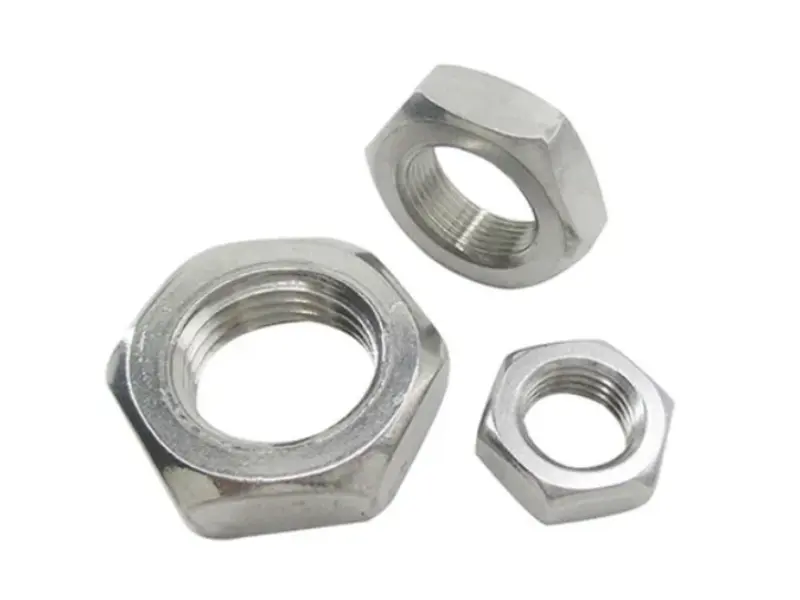
Packaging & Shipment for Bulk Project Orders
For bulk project procurement of engineering fasteners, safe packaging, complete documents and on-time shipment are the core concerns of overseas purchasers. We adopt standardized export packaging procedures for finished products. Waterproof plastic inner bags are used to separate nuts and prevent moisture and rust during sea transportation. Thickened export cartons are used for outer packing, and cartons will be stacked, bound and fixed on solid wooden export pallets for long-distance ocean transportation to resist extrusion and collision. Each carton is pasted with clear printed labels marking product standard, specification size, material grade, surface finish, gross weight, net weight and batch number, convenient for customer warehouse inventory management and customs inspection. DIN936 Thin Hex Nut Carbon Steel Stainless Steel supports customized packing labels and private brand printing as requested. Our document team prepares packing list, material test certificate and factory inspection report before shipment to simplify import clearance for overseas purchasers.
Why Choose Ningbo Gangtong Zheli Fasteners
Ningbo Gangtong Zheli Fasteners is a professional fastener manufacturer integrating raw material processing, cold forging, threading, surface treatment and export sales, equipped with complete production lines and strict quality inspection system. We have accumulated rich manufacturing experience in standard thin hex nuts and various DIN standard fasteners. All raw steel materials will carry out incoming inspection before production. Finished goods go through dimension checking and thread gauge inspection batch by batch before delivery. DIN936 Thin Hex Nut Carbon Steel Stainless Steel maintains stable and consistent batch quality for repeated large bulk orders. We keep sufficient spot inventory for popular conventional sizes to shorten production lead time and support fast delivery of small trial orders and large-scale bulk orders. At the same time, we accept non-standard customization according to customer drawings or physical samples, and provide professional pre-sales technical support for product selection, material recommendation and assembly consultation. Our factory accepts third-party quality inspection, winning long-term trust and stable cooperative relationships with hardware wholesalers and engineering customers all over the world.
FAQ
Q1: Can this thin nut bear the main load in structural connection?
A1: This product is designed for auxiliary locking in narrow assembly space. Users should not use DIN936 Thin Hex Nut Carbon Steel Stainless Steel as primary load-bearing fastener. DIN934 full height hex nuts are recommended for main force connection positions to guarantee structural safety.
Q2: What surface treatments are available for this nut?
A2: We supply blue white zinc, yellow zinc, black zinc, hot dip galvanizing and passivation options. DIN936 Thin Hex Nut Carbon Steel Stainless Steel can match different surface treatments according to the working environment and anti-rust requirement of your engineering project.
Q3: Is custom size available for special project requirements?
A3: Yes, we support custom non-standard sizes. Send your drawings or sample details, our technical team will evaluate feasibility and arrange production. DIN936 Thin Hex Nut Carbon Steel Stainless Steel can be manufactured with customized dimensions upon full technical confirmation.
Q4: What certificate documents can you provide together with shipment?
A4: Material test certificate and factory inspection report can be supplied for each production batch. DIN936 Thin Hex Nut Carbon Steel Stainless Steel comes with complete certification documents for project acceptance inspection and customs clearance.
Send Inquiry


X
We use cookies to offer you a better browsing experience, analyze site traffic and personalize content. By using this site, you agree to our use of cookies.
Privacy Policy