
How Does ASME B18.21.1 Spring Lock Washer CS Zinc Plated Work to Lock Bolted Connections?
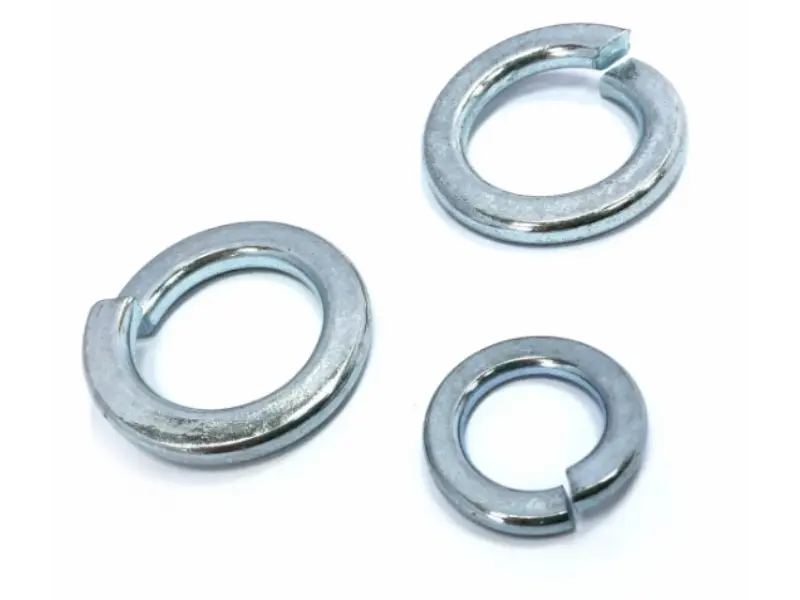
When you tighten a bolt and nut assembly, static friction alone is often not enough to keep the joint stable. Machinery, agricultural equipment and conveyor systems generate continuous vibration during operation, which can gradually loosen ordinary fasteners. This is where a helical split lock washer plays its role, and ASME B18.21.1 Spring Lock Washer CS Zinc Plated is the standard inch-size solution widely adopted for reliable locking.
The Basic Anti-Loosening Mechanism
Flat washers only spread clamping pressure over contact surfaces, while this spring lock washer adopts a split helical structure. When the nut is tightened, the opening gap of the washer is compressed. The treated carbon steel stores elastic spring force and presses tightly against the nut and base surface. This sustained spring pressure creates extra friction to resist rotation triggered by vibration or impact. The sharp split ends also lightly bite into contact surfaces to form auxiliary locking resistance.
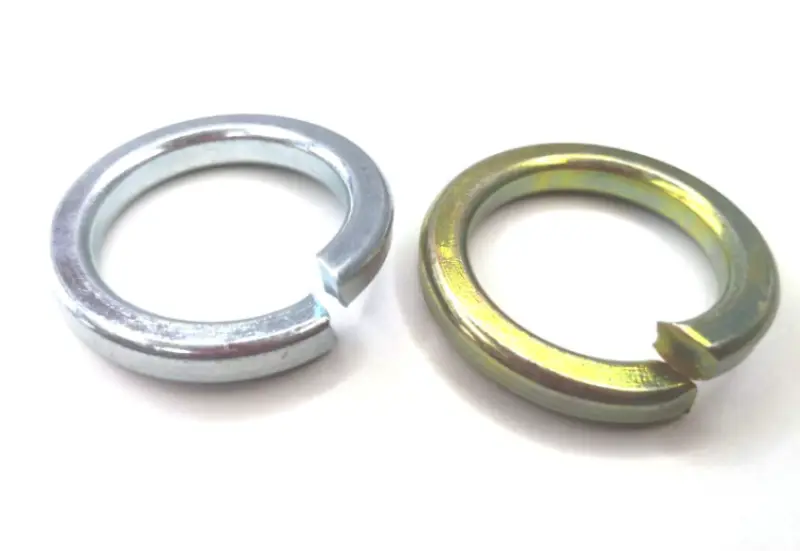
Core locking principles
- It stores elastic energy after compression and maintains constant pressure on mating surfaces
- Additional friction force counteracts the rotational tendency of nuts under vibration
- Split cutting edges provide a secondary bite effect to prevent free rotation
- The design works as a passive anti-loose structure without extra locking additives
Spring Washer vs Flat Washer Reference
|
Feature |
Spring Lock Washer |
Flat Washer |
|
Core function |
Anti-loosening via spring tension |
Disperse pressure, protect surface |
|
Structure |
Split helical opening |
Split helical opening |
|
Best for |
Vibration working conditions |
Static, low-vibration connections |
Standard & Material Foundation
Made of heat-treated carbon steel with zinc plating, ASME B18.21.1 Spring Lock Washer CS Zinc Plated is manufactured strictly following ASME B18.21.1 inch fastener specification. Heat treatment ensures the washer retains stable elasticity after repeated compression cycles. The zinc layer delivers moderate rust resistance for indoor and sheltered outdoor environments, offering a budget-friendly anti-loose choice for general industrial assemblies. It is designed to perfectly match UNC bolts and nuts for North American fastening systems.
Material & Finish Performance Comparison
|
Finish |
Corrosion Resistance |
Elastic Retention |
Suitable Environment |
|
Zinc Plated |
Moderate |
Good |
Indoor, covered outdoor |
|
Hot Dip |
Galvanized |
Excellent |
Fair Open-air, humid areas |
|
Black Oxide |
Low |
Excellent |
Dry indoor workshop |
Proper Installation Notes
Correct installation directly determines locking performance. Place the washer between the nut and workpiece surface. Stacking multiple spring lock washers is not recommended, as it will destroy the original spring curve and reduce anti-loose capacity. Also keep in mind that ASME B18.21.1 Spring Lock Washer CS Zinc Plated is an inch-series component. It is not compatible with metric bolts, and mismatched threads will lead to poor assembly and failure of anti-loose function.
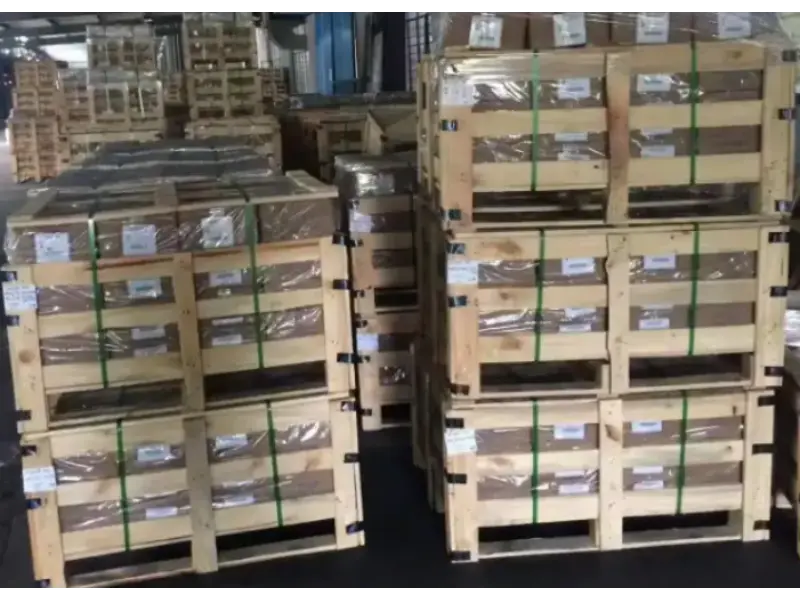
Critical installation reminders
- Do not over-tighten until the washer is completely flattened repeatedly, which will cause permanent spring failure
- It shall be assembled directly against the nut face, do not place it between bolt head and workpiece randomly
- Verify thread standard before installation, confirm UNC inch thread matching
- For heavy shock loads, combine it with other locking methods as redundant protection
Suitable Application Scenarios
Designers and fastener distributors choose ASME B18.21.1 Spring Lock Washer CS Zinc Plated for joints exposed to regular vibration. Typical uses include farm equipment frames, light steel brackets, pump housings, truck components and routine mechanical maintenance. For coastal or heavily humid environments with heavy corrosion risk, hot dip galvanized finish is a better option. Many engineers combine flat washers and this spring lock washer when both pressure dispersion and anti-loosening are required.
FAQ
Q: Will the thickness of the spring lock washer affect its anti-loosening effect?
A: Yes. Thickness is controlled according to ASME B18.21.1. Insufficient thickness leads to weak spring force, while over-thick washers cannot be fully compressed, both reducing locking performance.
Q: Will the zinc coating peel off during tightening and weaken locking?
A: Proper plating has strong adhesion and will not peel off under normal tightening. Excessively thick zinc coating is more likely to flake under compression.
Q: Does the spring tension decay naturally after long storage?
A: Elasticity stays stable when stored in dry and ventilated conditions. Rust formed in humid storage will gradually degrade the steel’s spring property.
Q: Can washers from different manufacturers be interchanged for the same size?
A: Products with the same standard are preferred. Hardness and spring parameters vary among factories, so mixing different suppliers is not recommended for high-vibration assemblies.
Send Inquiry


X
We use cookies to offer you a better browsing experience, analyze site traffic and personalize content. By using this site, you agree to our use of cookies.
Privacy Policy