
How Do You Choose the the Right Threaded Rod for Marine Environments
As someone who has spent over two decades navigating the complexities of material selection in harsh environments, I've seen firsthand the catastrophic costs of corrosion. When a seemingly simple component like a Threaded Rod fails in a marine setting, it can lead to project delays, safety hazards, and immense financial loss. The salt, moisture, and relentless UV exposure create a perfect storm for degradation. Over the years, my team and I at Gangtong Zheli have dedicated ourselves to solving this exact problem, moving beyond generic solutions to engineer products built for these specific challenges. This isn't just about selling a part; it's about providing a guarantee of integrity for your structures. So, let's dive into the critical question you must ask before your next project.
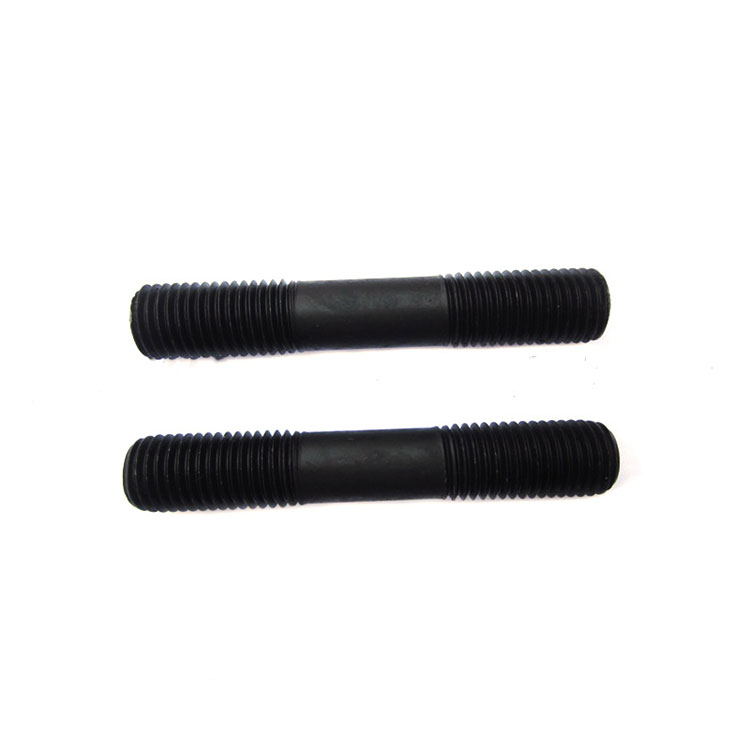
What Are the Primary Corrosion Challenges in Marine Environments
The ocean is an unforgiving partner. It doesn't just get things wet; it attacks them chemically and physically. When we talk about selecting a Threaded Rod, understanding the enemy is half the battle. The primary threats include
-
Saltwater Corrosion This is the most obvious threat. Chloride ions in saltwater aggressively break down the passive layer that protects ordinary steel, leading to rapid rust and pitting.
-
Galvanic Corrosion When two dissimilar metals are in contact in the presence of an electrolyte (like saltwater), one metal corrodes preferentially. If your Threaded Rod is less noble than the metal it's connected to, it will sacrifice itself and corrode away rapidly.
-
Crevice Corrosion This occurs in shielded areas, like under washers or nuts, where oxygen levels differ. Stagnant moisture in these crevices becomes highly corrosive.
-
Stress Corrosion Cracking The combination of tensile stress (from being tightened) and a corrosive environment can lead to sudden, brittle failure of the rod.
At Gangtong Zheli, we don't just consider these factors in a lab. We test our materials in real-world tidal zones and splash zones to see how they perform against these multifaceted attacks.
Which Material Grades Offer Superior Performance Against Saltwater
This is the core of the selection process. Not all stainless steels are created equal, and other materials offer unique advantages. The common choices, along with their pros and cons, are detailed in the table below. This is the kind of data-driven analysis we provide our clients to ensure they make an informed decision.
| Material Grade | Key Characteristics | Ideal Marine Application | Limitations |
|---|---|---|---|
| AISI 304 Stainless | Good general corrosion resistance, cost-effective. | Interior, non-splash zone applications with low chloride exposure. | Prone to pitting and crevice corrosion in saltwater; not recommended for critical, long-term exterior use. |
| AISI 316 Stainless | Contains 2-3% Molybdenum, enhancing resistance to pitting and crevice corrosion. | A standard for many marine fixtures, railings, and equipment in coastal atmospheres. | Can still suffer corrosion in highly aggressive or submerged conditions over very long periods. |
| AISI 316L Stainless | Low carbon version of 316, preventing sensitization (carbide precipitation during welding). | Perfect for welded structures like boat frames, pylons, and custom fabrications. | Slightly higher cost than 304; same limitations as 316 in severely corrosive environments. |
| Duplex 2205 | A mix of austenitic and ferritic structures, offering roughly twice the yield strength of 316. | Offshore platforms, shipbuilding, and highly stressed components in splash zones. | Higher initial material cost; requires expertise in machining and handling. |
| Alloy 625 (Inconel) | Exceptional resistance to a wide range of corrosives, including pitting and stress corrosion cracking. | Critical subsea applications, chemical processing platforms, and extreme service conditions. | Significant cost premium; often over-specified for standard marine construction. |
Based on our extensive field data, for the vast majority of demanding marine applications, we at Gangtong Zheli strongly advocate for AISI 316L or higher grades. It provides the best balance of performance, availability, and cost for a reliable Threaded Rod.
What Other Critical Parameters Beyond Material Should You Consider
Material is just the starting point. A high-quality Threaded Rod is defined by its entire specification suite. Here is a checklist of parameters you must verify with your supplier
-
Diameter and Pitch Ensure the thread pitch (UNC, UNF, Metric) is compatible with your nuts and anchoring systems.
-
Tensile Strength The rod must withstand the operational loads without yielding. Common grades are 70, 80, or even 100 ksi for high-strength applications.
-
Surface Finish A smooth, uniform finish is less likely to trap contaminants and initiate corrosion.
-
Certification Look for mill certificates (e.g., 3.1 Material Certificate) that trace the material back to its production batch, verifying its chemical composition and mechanical properties. This is non-negotiable for us at Gangtong Zheli; we provide full traceability for every batch.
To bring these parameters together, here is a typical specification table for a Gangtong Zheli marine-grade Threaded Rod
| Product Feature | Gangtong Zheli Marine Grade Specification |
|---|---|
| Base Material | AISI 316L Stainless Steel |
| Standard | ASTM A193 / ASTM A276 |
| Diameter Range | M6 (1/4") to M48 (2") |
| Tensile Strength | 70 ksi (min) |
| Proof Stress | 25 ksi (min) |
| Elongation | 40% (min) |
| Certification | EN 10204 3.1 Material Certificate |
| Special Feature | Passivated surface treatment for enhanced corrosion resistance. |

What Are the Most Common Threaded Rod FAQs from Marine Engineers
In my daily interactions with engineers and project managers, certain questions arise repeatedly. Let's address them head-on.
FAQ 1 What is the real difference between 304 and 316 stainless steel for a Threaded Rod
The critical difference is the addition of Molybdenum (Mo) in 316 stainless steel. Molybdenum significantly increases the alloy's resistance to pitting and crevice corrosion, which are the primary failure modes in chloride-rich marine environments. While 304 might look fine initially, 316 provides a much longer and more reliable service life, making it a wiser long-term investment.
FAQ 2 Can I use a hot-dip galvanized Threaded Rod instead of stainless steel in saltwater
While hot-dip galvanizing provides a thick zinc coating for protection, it is not recommended for permanent immersion or highly aggressive splash zones. The zinc coating will deplete over time (a process called sacrificial anode), eventually exposing the underlying steel to corrosion. For permanent marine structures, a solid stainless steel Threaded Rod like 316L offers a more robust and maintenance-free solution.
FAQ 3 My project requires welding the Threaded Rod. What special precautions are needed
Welding requires a low-carbon grade such as 316L. The "L" denotes a carbon content below 0.03%, which prevents "sensitization." During welding of standard 316, carbon can combine with chromium at grain boundaries, reducing local corrosion resistance. Using 316L eliminates this risk. Furthermore, always ensure the weld procedure is qualified, and consider post-weld cleaning to restore the passive layer in the heat-affected zone.
Why Should Your Project Trust Gangtong Zheli for Its Marine Components
Choosing a supplier is as critical as choosing the material. At Gangtong Zheli, our philosophy is built on three pillars. First, we practice radical transparency. You don't just get a product; you get the full story behind it—the mill certs, the test reports, the lot numbers. There are no mysteries in our supply chain. Second, we embrace collaborative problem-solving. We don't just take orders; we engage with your engineering challenges. Our two decades of experience mean we can often foresee potential issues with galvanic compatibility, load dynamics, or installation logistics that might not be apparent on a spec sheet. Finally, we are obsessed with longevity, not just short-term performance. Every Threaded Rod we produce is engineered with the end goal in mind: to remain intact, strong, and reliable for decades, minimizing your total cost of ownership and protecting your reputation.
Your marine project's integrity depends on the smallest components being as resilient as the largest. Don't let a standard, off-the-shelf Threaded Rod become the weakest link.
Contact us today for a personalized consultation and let our experts help you specify the perfect corrosion-fastening solution. Request your free material selection guide and a quote tailored to your specific marine environment challenges.
Send Inquiry


X
We use cookies to offer you a better browsing experience, analyze site traffic and personalize content. By using this site, you agree to our use of cookies.
Privacy Policy